Research

AI Security, Privacy & Forensics
We investigate how intelligent systems expose sensitive information, respond to adversarial manipulation and leave recoverable digital evidence. The scope spans text, audio, images, video and sensing data across consumer platforms, connected devices, LLMs and VLMs.
Projects examine privacy in writing and audio tools, wearable-data integrity, image-edit provenance and AI application artifacts. Published and preprint studies provide concrete foundations; broader cross-modal and video evaluation remain part of the evolving research agenda.
Explore projects & publications →
LLMs, Multimodal & Agentic AI
We study LLMs, VLMs and multimodal models that interpret language, images and sensor information, alongside emerging agentic AI workflows. Key questions concern whether outputs remain grounded in input evidence, how modalities interact under attack and how privacy changes when people use AI assistants.
Published VLM robustness and consumer-assistant studies sit alongside emerging work on agent-to-agent interactions and multimodal screening prototypes. The goal is to characterize capabilities and failure modes with clear evaluation limits, rather than equating fluent responses with reliable decisions.
Explore projects & publications →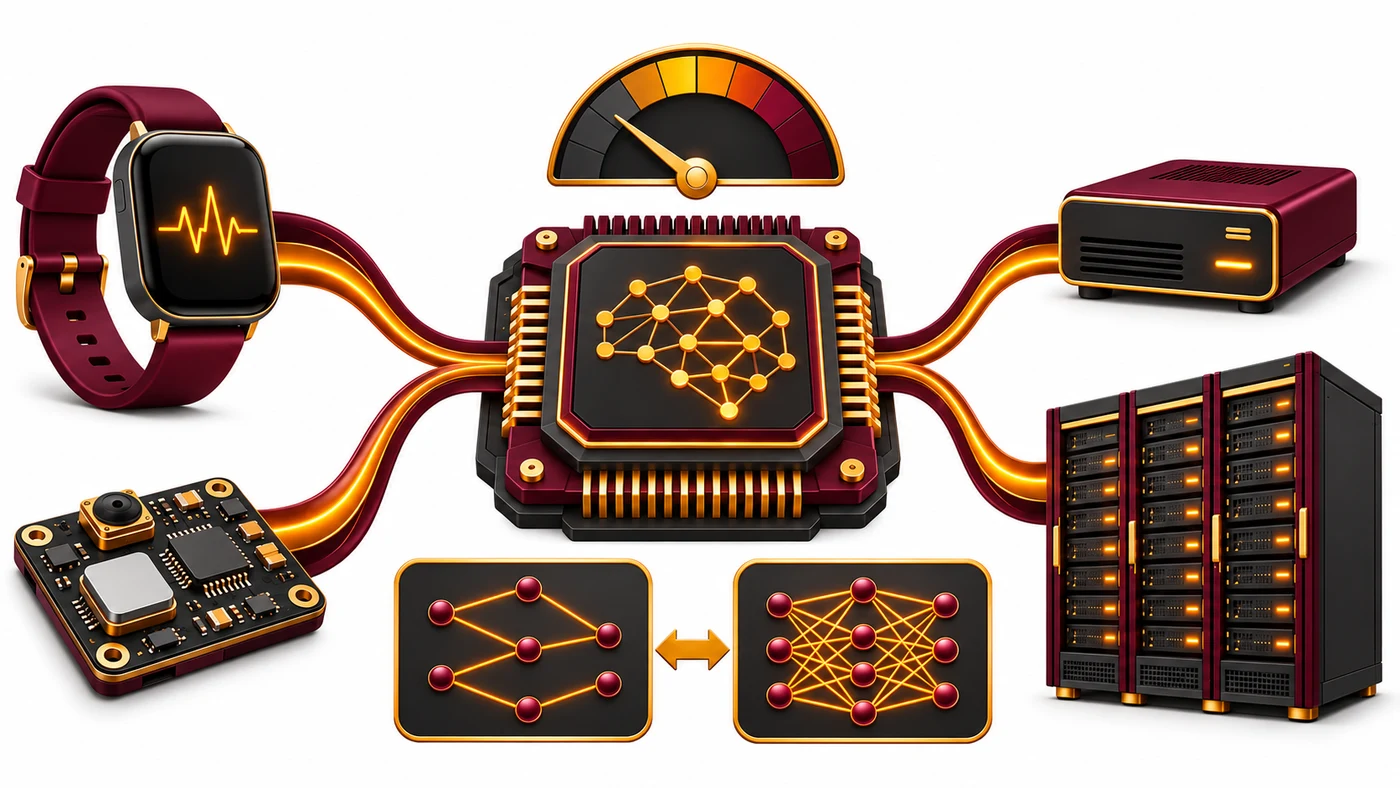
Secure & Sustainable AI Systems
We study security and efficiency together, asking how attacks, defenses and learning strategies change predictive utility, energy use and response time. This matters when battery budgets, response deadlines and computing costs limit deployment of on-device AI, LLMs and agentic services across edge and cloud systems.
Existing work examines energy–latency attacks, model-pruning defenses, environmental-cost measurement and robustness–sustainability tradeoffs. Resource-aware agents and data-center-scale evaluation are emerging directions, not established infrastructure deployments.
Explore projects & publications →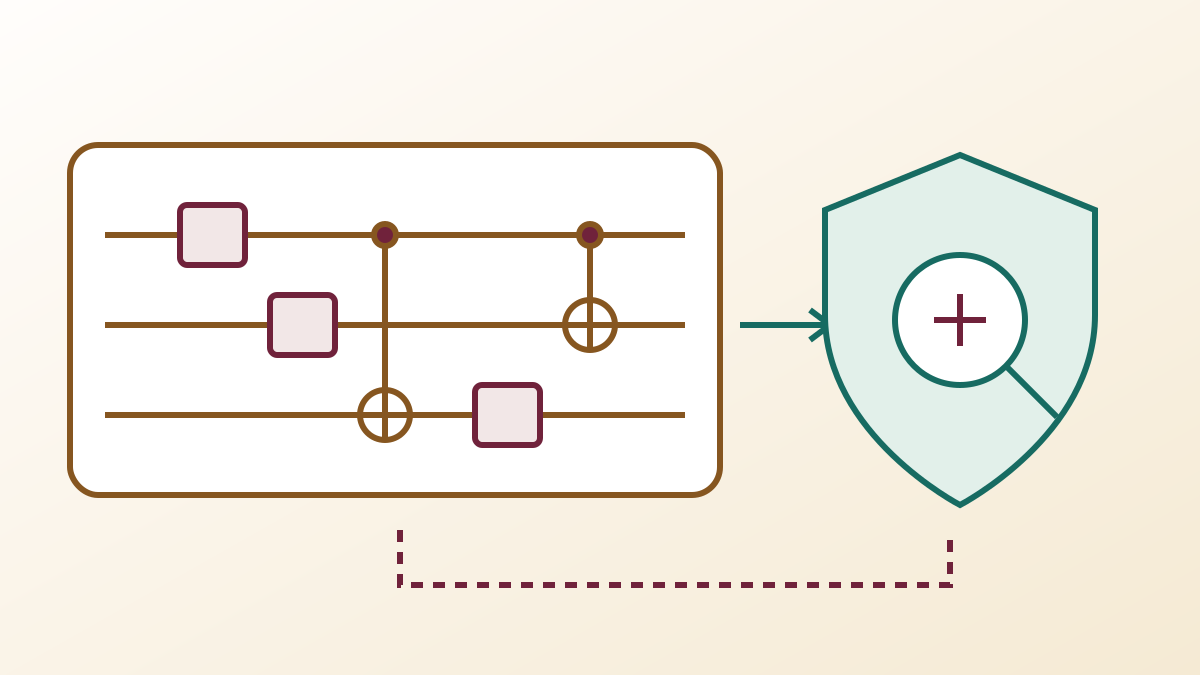
Quantum AI & Security
We explore the trainability and reliability of quantum machine learning (quantum ML) and hybrid quantum–classical architectures. The focus is on careful evaluation of circuit structure, optimization behavior and computational assumptions rather than assuming that quantum components provide an advantage.
The Q-Capsule preprint investigates localized capsule-based architectures for barren plateau mitigation. Security and robustness testing form an emerging agenda, with controlled comparisons needed to distinguish architectural effects, noise and adversarial sensitivity.
Explore projects & publications →
Cyber-Physical Systems
We connect sensing, learning and physical environments under privacy, reliability and resource constraints. Research examines how multimodal sensing, on-device AI and distributed IoT systems can support useful interpretation without overlooking data integrity or the consequences of incorrect outputs.
Projects include wearable activity and stress recognition, language-assisted fall detection, healthcare-oriented architectures and resource-constrained driver-awareness monitoring. These are research studies and prototypes; safe operational or clinical use requires setting-specific validation.
Explore projects & publications →